Istorie
Buick is an American automotive division of the manufacturer General Motors (GM). For much of its presence in the North American market, Buick has been positioned as a premium brand, offering entry-level luxury vehicles situated between the mainstream Chevrolet brand and the flagship Cadillac division.
Full description
Buick introduced the Series 40 in 1930 as a replacement for the Series 116. The Series 40 rode on a 118 inch (297 cm) wheelbase and powered by a 4.2 litre six cylinder engine which produced 80bhp. Braking was through mechanical drums found on all four corners. The suspension was comprised of semi-elliptic springs and Lovejoy hydraulic shock absorbers.
During its first year, there were six body styles to select from, including a Sedan, Sport Roadster, Business Coupe and Special Coupe in two-door configuration. A Phaeton and Sedan version were offered with four doors, with the four-door sedan with seating for five being the most popular body style on the Series 40. Pricing was rather competitive, starting at $1260 and continuing through $1300. The Phaeton was available with four or five seats and recorded the lowest sales in the Series 40, with a total of just under 1,000 units.
The name ‘Series 40’ remained dormant for a few years, making its re-appearance in 1934. They were again Buicks entry-level vehicle, though much had changed in these few short years. The Series 40 lightweight vehicles powered by an eight-cylinder engine that measured 3.8 litres and produced nearly 100 horsepower.
When production resumed in 1946, the Series 40 was the only Buick model to retain the prewar Fisher B body styles characteristic of the postwar era. Two body variants were available, both with a 121-inch (307 cm) wheelbase and six seats. The four-door version was priced at $1,580, while the two-door version cost $1,520. These models represented Buick’s entry-level vehicles, just as they had before World War II. Sales were slow, with approximately 3,000 units produced in total across the two- and four-door versions. The 4-liter engine delivered a nominal output of around 110 horsepower.
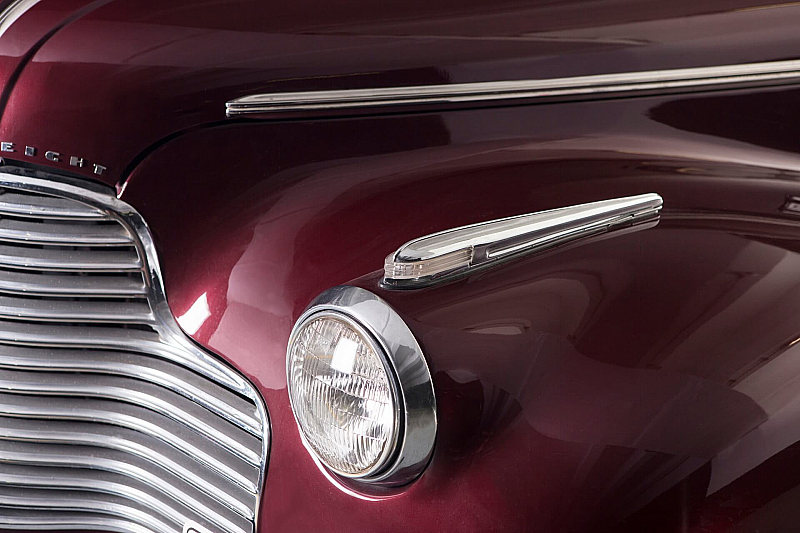
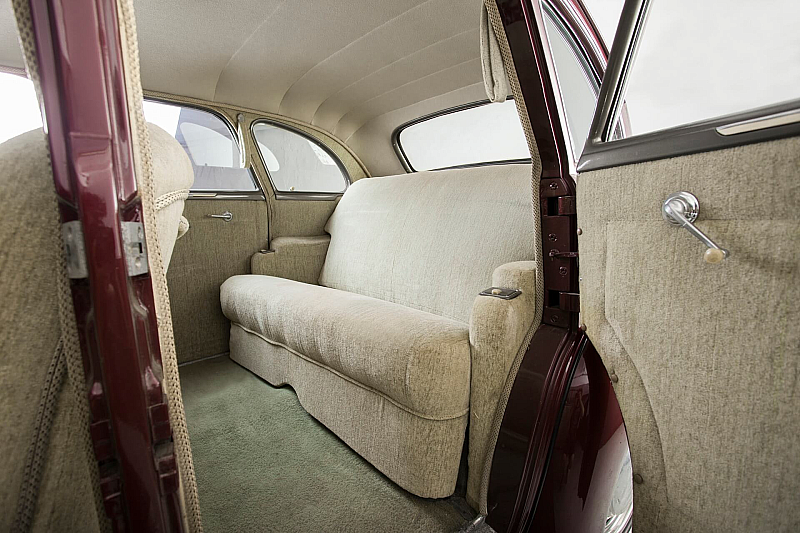
No major changes were made to the Series 40 until 1950, when the models received stylistic updates. The design was modern and memorable, with the grille becoming one of the car’s most distinctive features. Three ventilation openings were now placed on the sides of the engine compartment. The public responded positively to these changes, and sales increased, surpassing 200,000 units for both the Series 40 and Series 40D. The Series 40D was a Special Deluxe version, maintaining the same style and dimensions as the Series 40 but featuring interior enhancements, additional trim and moldings, and the “Special” badge on the front fenders.
This car has covered 95,967 miles.